
Hakam Din
Basset Clarinet in A - Reconstruction Based on Anton Stadler’s 1794 Riga Drawing
Basset Clarinet in A - Reconstruction Based on Anton Stadler’s 1794 Riga Drawing
Couldn't load pickup availability
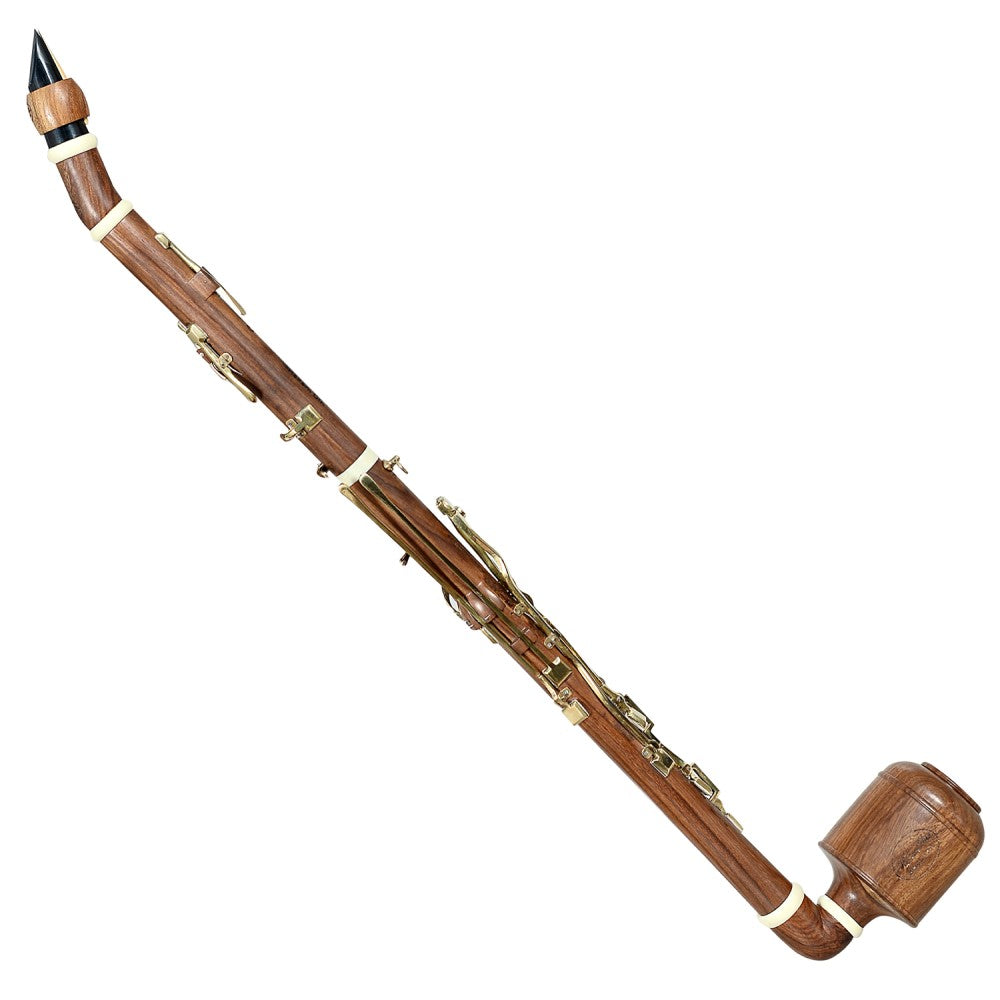
This basset clarinet reflects the work of Theodor Lotz, the renowned Viennese maker who collaborated with Anton Stadler, Mozart’s virtuoso clarinet player. Together, Lotz and Stadler extended the clarinet’s range down to C, following the extended lower range of the basset horn of the time.
This is the type of clarinet Wolfgang Amadeus Mozart had in mind when composing his famous Clarinet Concerto in A major, K. 622, and Clarinet Quintet in A major, K. 581, as well as other works written for Anton Stadler and his extended-range instrument.
Hakam Din reconstruction of the basset clarinet in A is based on the historical sketch of Anton Stadler’s instrument shown in his 1794 concert program in Riga, together with the construction principles of early five-key clarinets and basset horns, as no original instrument known to have been played by Stadler survives.
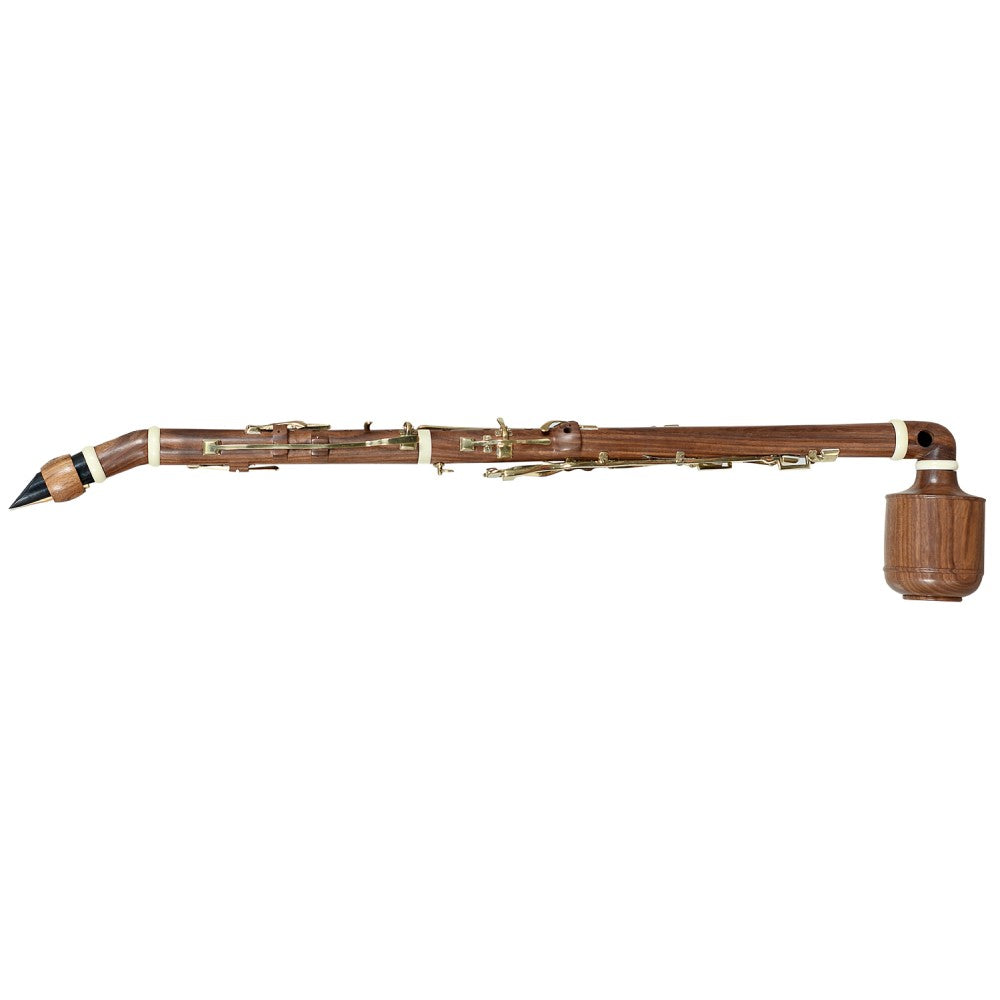
Based on the Riga drawing, the bell follows the well known “Liebesfuß” design. The low B, below C, can be produced by closing the vent hole at the bell elbow joint against the leg. In Mozart’s Clarinet Concerto, this technique has been proposed for passages in the 1st movement (bar 295) and the 3rd movement (bar 147).
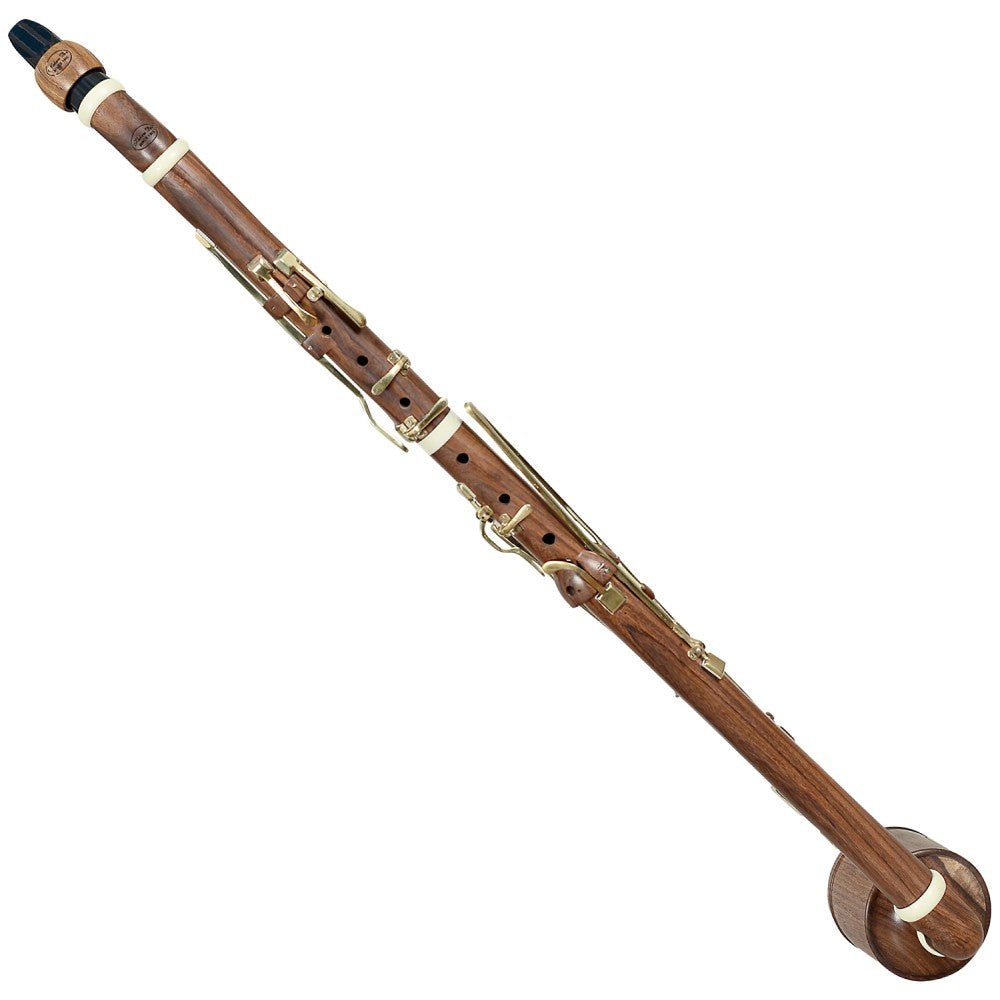
The upper joint has additional G#, Eb, C# and a Bb trill keys. The lower joint has additional Bb and B keys, together with four basset keys for the written notes Eb, D, C#, and C, while retaining the five-key configuration as the foundation of the instrument. The keys are cast in brass and left in its original finish, fitted with brass pins, steel springs, and leather pads.
The instrument is crafted in Indian Cocobolo wood, with hand-carved main key blocks and brass fittings for extra keys and basset keys, the rings are individually hand-crafted from imitation Ivory.
It is designed to be used with a standard modern Bb clarinet mouthpiece. The barrel receiver is tailored to accommodate modern Bb clarinet mouthpieces, including the Vandoren B45.
The basset clarinet comes complete with a fingering chart, care instructions, a care kit and a case.
Additional Keywork: You may choose to keep or remove any or all of the additional keys. Please contact us to discuss your preferred key configuration.
Waiting time is 60 days.