


Hakam Din
J. J. Quantz 1750 after Dayton C. Miller Collection - A=415 Hz
J. J. Quantz 1750 after Dayton C. Miller Collection - A=415 Hz
Couldn't load pickup availability


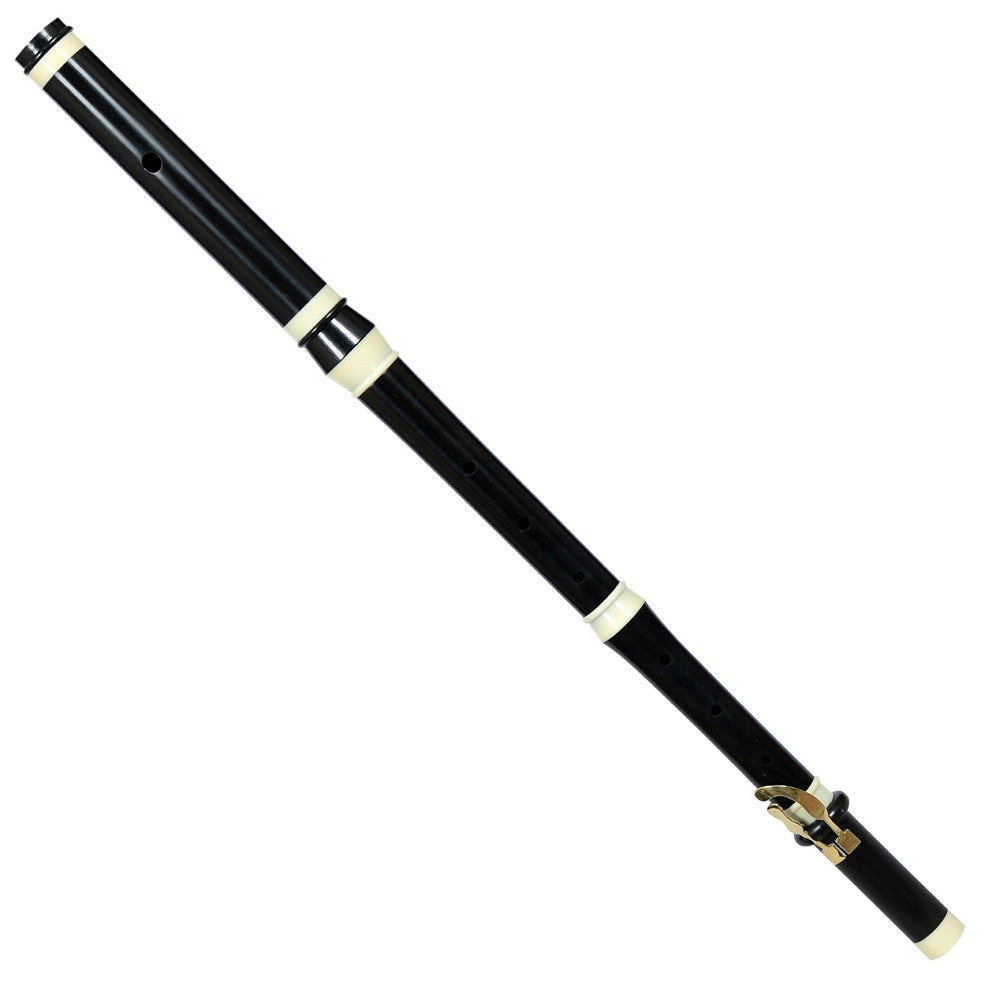
A=415 Hz - The flute is tuned to Baroque pitch with a 10 mm tuning-slide opening.
You have the option of olive, cocobolo or grenadilla wood. Carefully selected wood, the rings are individually hand-crafted from cocobolo wood or imitation Ivory, adding a distinctive contrast and elegant appearance while giving the instrument an added sense of craftsmanship and value.
The D foot joint has two brass Eb and D# keys mounted on a hand-carved key block made directly from the wood body. The keys are cast in brass and left in its original finish, fitted with a brass pin, steel spring, and leather pad.
The traverso comes complete with a fingering chart, care instructions, a care kit and a case.
The Legacy of Johann Joachim Quantz:
- Quantz was one of the most important flute virtuosos and theorists of the 18th century. A central figure in European musical life, he is renowned not only for his compositions but also for his influential treatise “On Playing the Flute” (1752), one of the most important sources on 18th-century performance practice and flute technique. The treatise remains an essential reference for historically informed performance, offering detailed insight into Baroque and early Classical flute technique, articulation, and musical expression..
- Quantz served as flute teacher, composer, and court musician to Frederick II of Prussia, with their close musical association beginning in the 1720s and continuing throughout Frederick’s reign. His pedagogical and musical influence shaped the Berlin flute tradition and court style of performance.
- Several original flutes associated with Quantz’s circle survive today, many preserved in the collection of Frederick the Great, reflecting the high level of craftsmanship and refinement of the Berlin school.
Quantz’s Innovations in Flute Design:
- During the 1730s and 1740s, Quantz was closely involved in the refinement of flute construction, contributing significantly to the evolution of the instrument’s design and performance capabilities. Quantz’s legacy includes the development of the adjustable headjoint, often referred to as the “slide head." This innovation allowed flutists to make fine pitch adjustments, improving intonation across different tonalities. This principle remains fundamental to modern flute design.
- Quantz also added an E-flat key on the foot joint in some instruments of the Berlin tradition. This innovation enhanced technical ease and expanded expressive possibilities, and represents an important step in the gradual development of the keyed flute.